
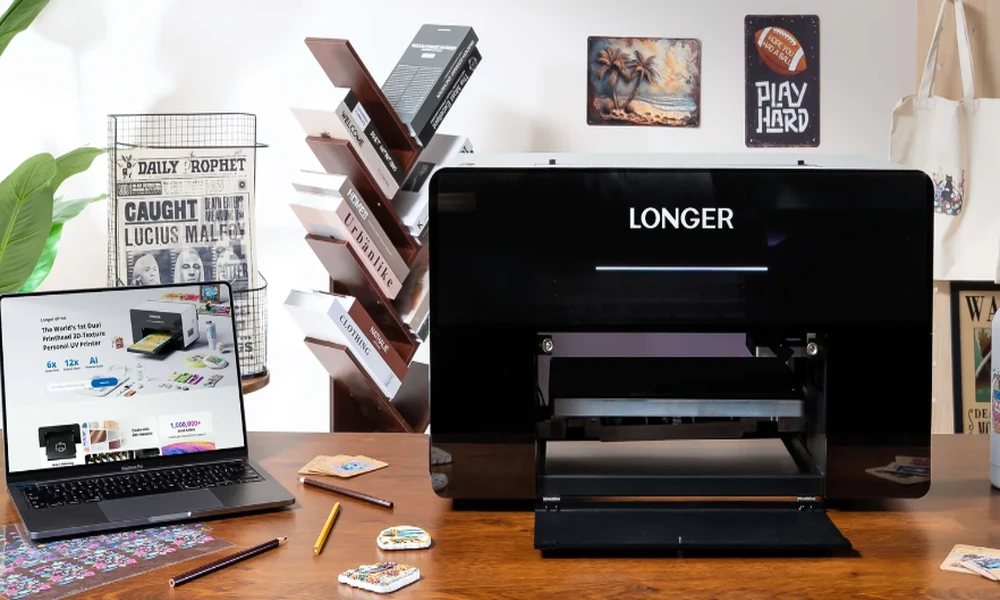
Having spent the last decade tearing down, testing, and reviewing over 50 different uv printer models on my YouTube channel, one question pops up in my comment section more than any other: “Should I start with a single-head machine, or jump straight to a Dual Head UV Printer?”
Having published dozens of hands-on teardowns and deep-dive benchmarks with millions of views, I can tell you that this single choice determines your printing speed, image quality, substrate versatility, and long-term operating costs. Here is the definitive breakdown of the mechanics, performance benchmarks, and real-world differences between single-head and dual-head UV printing systems.
Understanding the Core Architecture
To understand the practical differences, you first need to understand how print heads handle UV ink formulation. A typical uv printer utilizes three primary ink types: CMYK (color), White, and Varnish (Clear Coat).
In a single-head UV printer, all available ink channels inside a single print head (such as an Epson XP600 or TX800) are split between color and white inks. For example, a 6-channel print head typically dedicates four channels to CMYK and two channels to White ink.
In contrast, a Dual Head UV Printer features two completely independent physical print heads mounted side-by-side or in tandem on the carriage shuttle:
Print Head 1: Dedicated exclusively to White ink (or White + Primer).
Print Head 2: Dedicated to CMYK color inks (or CMYK + Varnish).
This structural distinction fundamentally changes how the machine processes print jobs on the shop floor.
Print Speed: The Single-Pass Advantage
The biggest difference you will notice in daily operations is raw throughput.
When printing on dark or transparent substrates-such as black acrylic, dark phone cases, or glass-you must lay down a solid white under-base first so the colored graphics appear vibrant and true to life.
With a single-head machine, the print carriage must perform two separate passes:
First Pass: Lay down the white ink base.
Second Pass: Return to the starting position and print the CMYK color layer over the top.
Because a single print head must divide its physical nozzles and execute multiple passes, production speed drops by 50% to 60%.
A Dual Head UV Printer solves this bottleneck through single-pass simultaneous printing. The first head lays down the white under-base while the second head immediately follows milliseconds behind to deposit the CMYK layer in the exact same carriage stroke. In my real-world lab benchmarks, a dual-head setup routinely produces 2x to 2.5x more finished products per hour than a single-head equivalent.
Color Density, Embossing, and Varnish Effects
Print quality isn’t just about resolution DPI; it’s about ink volume and layer management.
White Ink Opacity: White UV ink is heavily pigmented with titanium dioxide and requires high ink density to eliminate transparency on dark backgrounds. A dual-head system dedicates an entire print head (typically 6 to 8 channels) solely to white ink, creating a rich, opaque base layer in a single stroke.
3D Texture & Tactile Embossing: If you want to create raised textures, braille signage, or 3D phone case grips, you need to lay down thick layers of white ink rapidly. Dual-head systems excel here because of their concentrated ink delivery volume.
Gloss Varnish Finish: Adding a protective, high-gloss clear varnish layer gives custom merchandise a premium feel. Dual-head configurations allow you to print White + CMYK + Varnish in a single streamlined workflow, whereas single-head units struggle to incorporate varnish without severely compromising color fidelity or speed.
Maintenance, Reliability, and Running Costs
From a technical maintenance perspective, white ink is every uv printer operator’s greatest challenge because dense titanium dioxide particles settle quickly, causing potential nozzle clogs if left idle.
Single-Head Risk: If white ink clogs two channels on a single print head, your entire print head is compromised. You lose color printing capabilities even if your CMYK channels are completely clean.
Dual-Head Isolation: On a Dual Head UV Printer, the white ink subsystem is physically isolated from the CMYK color head. If you experience persistent clogging in the white print head, you can clean, flush, or replace that individual head without replacing the color head, saving significant maintenance overhead.
While dual-head printers carry a higher upfront hardware investment (typically 30% to 50% more expensive than entry-level single-head models), the dramatic boost in daily output rapidly recovers that initial capital outlay for active production environments.
The Final Verdict: Which One Fits Your Business?
After ten years of testing every tier of uv printer technology on the market, here is my straightforward recommendation:
Choose a Single-Head UV Printer if:
You are a beginner, hobbyist, or small shop taking your first steps into custom merchandise creation.
You primarily print on white or light-colored substrates that do not require heavy white ink under-bases.
Your daily production volume is low (under 20-30 small items per day), and speed is not a critical bottleneck.
Upgrade to a Dual Head UV Printer if:
You operate a commercial printing business, Etsy shop, or production line with tight turnaround deadlines.
You frequently print on dark, transparent, or textured materials requiring high-opacity white ink or 3D embossed effects.
You want to offer premium gloss varnish finishes and maximum single-pass efficiency.
Investing in a Dual Head UV Printer isn’t just buying extra hardware-it’s buying speed, reliability, and room for your business to scale efficiently.