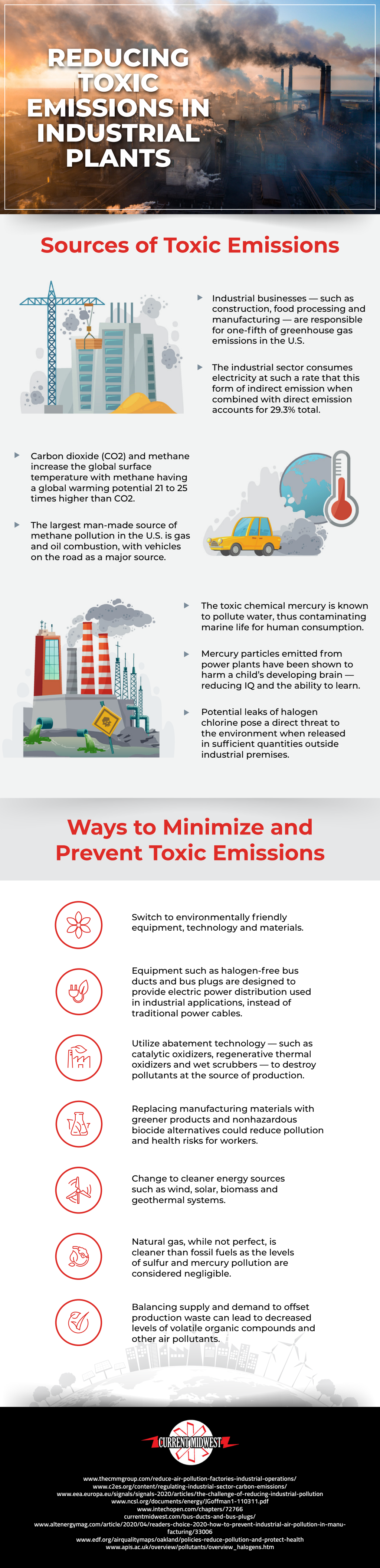
In today’s political and environmental landscape, the need to reduce toxic emissions from industrial activity is impossible to ignore. Clean air should be considered a basic human right. Yet without strong legislation, enforcement, and meaningful incentives, many companies around the world continue to release pollutants at harmful levels.
The health consequences tied to air pollution are becoming increasingly clear. Research continues to link poor air quality to serious conditions such as cancer, respiratory disease, heart disease, and stroke. Clean air is not only essential for public health, it also has economic implications. Studies suggest that if emissions are not significantly reduced by 2060, the global economy could lose an estimated 3.8 billion workdays each year due to pollution-related illness.
Industry plays a critical role in economic growth, but it is also a major source of environmental harm. In the United States alone, industrial activity accounts for roughly one-fifth of greenhouse gas emissions. It also contributes heavily to water and soil pollution. Industrial processes release a range of hazardous substances, including aerosols, particulate matter, toxic gases, and chemical vapors. When combined with the sector’s high energy demand, which represents about 25 percent of total U.S. electricity use, and the generation of large volumes of toxic waste, the call for meaningful change is well justified.
Reducing pollution across air, land, and water requires a multifaceted approach. Industrial organizations can take meaningful steps by adopting abatement technologies, upgrading to advanced equipment, and selecting responsibly sourced materials. These actions help limit harmful byproducts while improving operational efficiency.
For example, halogen-free bus ducts and bus plugs support power distribution while minimizing the release of chlorine and other harmful chemicals associated with traditional systems. Emerging pollution control technologies also offer ways to capture or neutralize emissions as they are created. Solutions such as catalytic oxidizers, wet scrubbers, and rotary concentrators can significantly reduce pollutants during production. In addition, switching to green materials and nonhazardous biocide alternatives can lower toxicity in air, water, and waste streams. While these materials may involve higher upfront costs, they reduce health risks for workers and contribute to a better overall quality of life.
Clean energy, sustainable sourcing, and environmentally responsible industrial standards are not distant goals. They are necessary steps that can be taken now. By changing how energy is produced, how materials are chosen, and how emissions are controlled, companies have the opportunity to protect human health and prevent further environmental damage.
Improving fuel efficiency, reducing pollutant output, and strengthening oversight systems are urgent priorities. Advancing legislation focused on industrial emissions and enhancing monitoring and evaluation across industries are essential steps forward. Achieving a zero-pollution future depends on the willingness of today’s industries to act decisively so that future generations can thrive.
For more information on industrial pollution, see the accompanying resource from Current Midwest, an electronic transformer company.