
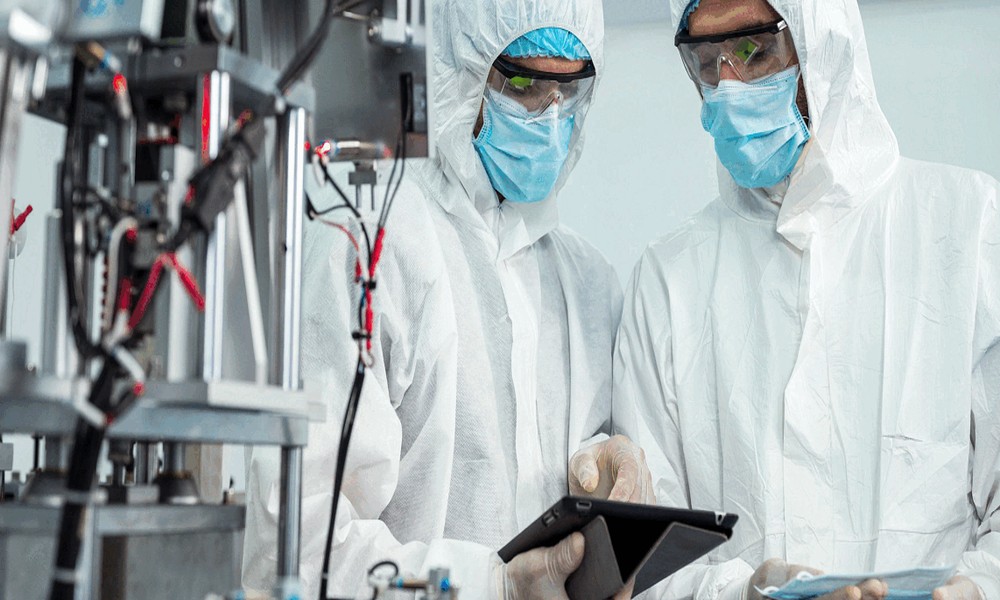
In industries where accuracy is critical, including aerospace, pharmaceuticals, food processing, and semiconductor manufacturing, cleanliness goes far beyond what can be seen. Facilities may appear immaculate, yet microscopic particles can still disrupt production, compromise quality, and create compliance challenges. Preventing these risks requires a comprehensive contamination control strategy that extends well past surface cleaning.
Hidden Sources of Contamination
Routine cleaning and filtered airflow are essential, but they do not eliminate every threat. Mechanical wear is a common contributor, as seals, gaskets, and aging components slowly shed particles during normal operation. These contaminants often remain unnoticed until they begin affecting product performance or triggering regulatory concerns.
Daily movement within a facility can also spread particles. Opening doors, transporting tools, or moving between zones can disturb settled contaminants and carry them into controlled areas. Without clearly defined movement protocols, even simple tasks can introduce risk.
Environmental conditions add another layer of complexity. Changes in temperature or humidity can lead to condensation on ceilings, ductwork, or overhead structures. When moisture evaporates, trapped particles may fall into clean spaces. Static electricity on plastic or synthetic materials can attract fine debris, which may later be released during handling.
Even sophisticated air handling systems require oversight. Poor airflow design or insufficient testing can create stagnant areas where particles accumulate undetected over time.
Reducing Risk Through Proactive Control
The strongest contamination control strategies rely on continuous monitoring rather than isolated inspections. Tracking particle levels over time helps identify patterns and pinpoint activities, maintenance schedules, or environmental changes that contribute to contamination.
Facility design also plays a critical role. Cleanrooms should use smooth, nonporous materials that are easy to sanitize and free of crevices where particles can collect. Equipment designed for efficient access and disassembly reduces the likelihood of buildup and shortens maintenance cycles.
Personnel practices matter just as much. Selecting workwear that minimizes fiber shedding and reinforcing proper gowning procedures can significantly reduce the amount of contamination introduced by staff. Consistency across teams helps ensure these standards remain effective.
Maintenance activities must be planned with contamination prevention in mind. Tasks such as filter replacement, lubrication, and equipment inspection should be coordinated carefully to protect controlled environments. When operations and maintenance teams collaborate closely, clean zones remain protected even during high-demand periods.
Moving Toward Predictive Contamination Management
Relying solely on reactive cleaning leaves room for disruption. A predictive approach focuses on understanding particle behavior, testing airflow regularly, and providing ongoing staff training. This forward-looking strategy allows facilities to address risks before they impact production.
Small particles can cause significant setbacks if left unmanaged. Maintaining quality and compliance requires attention to the full life cycle of contamination, from its source to its movement through a facility. By taking a system-wide approach, organizations can reduce downtime, preserve efficiency, and protect the integrity of every product they produce.
For more on this, check out the accompanying resource from Technical Safety Services, a provider of cleanroom certification services.
